-
From Movies to Data: How Big Data Transforms Our Lives
I didn’t start thinking about Big Data because of a textbook.
I started thinking about it after watching a movie.
Recently, I watched Lucky Baskhar, a movie set in a very different era of banking and financial transactions. One thing that caught my attention was how much banking and bookkeeping depended on records being maintained and updated periodically.
Businesses maintained their books, recorded deposits and withdrawals, and the information was not necessarily reflected in the banking system immediately.
That made me think about something simple:
What happens when there is a gap between when something happens and when the data about it becomes available?
Now compare that with the world we live in today.
A bank transaction can happen in seconds.
You can transfer money from your phone while sitting at home. You can receive a payment notification almost instantly. Millions of transactions can happen across banks and digital platforms in a single day.
The problem has completely changed.
We are no longer dealing with too little data.
We are dealing with too much data.
And this is where my interest in Big Data started.
From Manual Records to Massive Amounts of Data

Imagine the banking environment shown in an old movie.
A business maintains its books.
Transactions happen.
Records are updated.
Eventually, the information reaches the bank.
There is a certain amount of delay between the actual activity and the availability of the information.
Now think about today’s digital world.
Every second, people are:
- Making digital payments
- Withdrawing money
- Sending money
- Shopping online
- Searching the internet
- Watching videos
- Using social media
- Making phone calls
- Using mobile applications
At the same time, machines, servers, sensors, websites, and organizations are generating their own data.
Suddenly, the challenge isn’t just recording transactions.
The challenge is:
How can we effectively capture, store, process, and analyze this information in a timely manner to ensure its usefulness?
That’s the Big Data problem.
Movies Often Show Us the Problem Before We See the Technology
There are many movies and real-life stories built around financial fraud, scams, manipulation, and the misuse of information.
What I find interesting is that behind many of these stories, there is one common element:
Information.
Who has the information?
Who doesn’t have it?
How quickly does someone get it?
Can different pieces of information be connected?
And most importantly:
Can we identify a pattern before it causes more damage?
This is where Big Data can become extremely useful.
For example, imagine a scammer making fraudulent calls to hundreds or thousands of people.
One person reports the number.
Individually, that report may not seem very significant.
But now imagine thousands of reports from different people, locations, organizations, and platforms being combined.
Patterns can start to emerge.
The same phone number may appear repeatedly.
The same identity may be associated with multiple suspicious activities.
The same script or method may be used against different victims.
The same bank accounts or digital identifiers may appear across multiple complaints.
One piece of data may not tell us much.
Millions of connected pieces of data can tell a very different story.
The “Digital Arrest” Problem
A recent example that made this even more interesting for me was the rise of scams involving what became popularly known as “digital arrest.”
For many people, the idea initially sounded almost unbelievable.
Someone receives a call and is told that they are involved in a serious legal case.
The caller may pretend to be a police officer or another government authority.
The victim is pressured, frightened, and sometimes told that they must remain on a video call or follow instructions to avoid arrest.
The phrase “digital arrest” itself sounds strange.
But the consequences were very real.
This wasn’t simply a problem affecting one person.
Once reports started appearing from different parts of the country, it became clear that awareness was extremely important.
People needed to understand:
There is no such thing as a “digital arrest.”
Government agencies and organizations took steps to spread awareness and help people recognize these types of scams.
But think about the data challenge behind a problem like this.
If a scam is happening in one city, you might be able to understand it by looking at local complaints.
But what if the same group is targeting people across:
- Multiple cities
- Multiple states
- Different countries
- Different phone numbers
- Different bank accounts
- Different digital platforms
Now the problem becomes much bigger.
You Don’t Need Data From One City. You Need Connected Data.

This is where I think Big Data becomes easier to understand.
Suppose one person reports a scam in Patna.
Another person reports something similar in Delhi.
Someone else reports it in Mumbai.
Another report comes from Bengaluru.
And another comes from outside India.
If we look at each complaint separately, they may appear to be individual incidents.
But what happens when we connect them?
We might discover:
Same phone number → Same pattern → Similar message → Similar payment method → Similar identity → Multiple victims
That connection is extremely valuable.
And this is why organizations dealing with large-scale fraud cannot rely only on data from a single location.
They may need information from multiple cities, states, organizations, platforms, and potentially countries to identify broader patterns.
The more data sources we can responsibly connect and analyze, the better we may become at understanding how these activities operate.
But There Is a Problem: Data Is Huge
Now comes the difficult part.
Collecting data is one thing.
Managing it is another.
Imagine receiving:
- Millions of phone records
- Transaction records
- Complaint reports
- Bank transactions
- Website activity
- Emails
- Social media information
- Call records
- Images
- Videos
- Documents
- Location information
- Device information
And imagine that this data is arriving continuously.
You can’t simply put everything into one Excel file and start analyzing it.
Even a powerful laptop has practical limitations.
This is where Big Data technologies and scalable data infrastructure become important.
Organizations may need:
- Large-scale storage
- Distributed databases
- Data processing systems
- Cloud infrastructure
- Data pipelines
- Real-time processing
- Analytics platforms
- Machine learning models
The technology helps organizations handle data at a scale that traditional systems may struggle with.
So, What Exactly Makes Data “Big”?
This brings us to the actual definition of Big Data.
Big Data isn’t simply about having a large file.
It is about data becoming difficult to manage because of factors such as:
Volume : How much data are we dealing with?
Velocity: How quickly is new data being generated?
Variety : What different types of data do we have?
Veracity : Can we trust the data?
These are commonly called the 4 Vs of Big Data.
And suddenly, the concept becomes much easier to understand.
Big Data Is Not Just About Fraud
Fraud detection is only one example.
The same concept can be applied across almost every major industry.
Healthcare
Hospitals can analyze patient records, medical reports, diagnostic images, treatment histories, and sensor data.
Big Data in Healthcare → Better insights and decision support
Finance
Banks and financial institutions can analyze enormous numbers of transactions to identify unusual patterns and support fraud detection and risk analysis.
Big Data in Finance → Fraud detection and risk analysis
Supply Chain
Companies can combine sales, inventory, supplier, transportation, and customer-demand data to forecast demand.
Big Data in Supply Chain → Better forecasting and inventory management
Business
Organizations can analyze customer behavior, sales, financial information, and operational data to understand what is happening in the business.
Big Data in Business → Better decision-making
From Data to Action
For me, this is the most interesting part of Big Data.
Data by itself isn’t necessarily useful.
The real value comes when we can turn data into information, information into insights, and insights into action.
Think about the process:
Data → Processing → Analysis → Pattern → Insight → Action
Take the scam example.
Individual complaint
↓
Thousands of complaints
↓
Combine and process the data
↓
Identify common patterns
↓
Detect suspicious activity
↓
Create awareness / take action
That’s the power of data when it is used at scale.
Big Data Is Also a Data Quality Problem
There is another lesson hidden inside all of this.
Having more data doesn’t automatically mean having better information.
Imagine receiving 10 million fraud reports, but:
- Some phone numbers are incorrect
- Some records are duplicated
- Some information is missing
- Different organizations use different formats
- Some reports are outdated
- Some information cannot be verified
Now you have a huge dataset—but potentially poor-quality information.
That’s why Veracity matters.
The question isn’t only:
“How much data do we have?”
We also need to ask:
“Can we trust it?”
Why Big Data Matters to Students
If you are a student learning Data Analytics, Data Science, Artificial Intelligence, or Data Engineering, this is why Big Data is worth understanding.
You may eventually work with:
- SQL
- Python
- Power BI
- Cloud platforms
- Data warehouses
- Machine learning
- Data pipelines
- Distributed systems
But all of these technologies exist for a larger purpose:
To turn data into something useful.
You might start your career analyzing a few thousand rows in Excel.
Later, you might work with millions or billions of records.
The fundamental question remains the same:
What does the data tell us?
The difference is the scale and complexity of the problem.
The Big Picture
When I think back to Lucky Baskhar, the interesting contrast is not simply old banking versus modern banking.
It is the evolution of our relationship with data.
Earlier, we had relatively limited digital data and significant delays in recording and sharing information.
Today, we generate data almost everywhere, all the time.
A single person can create data through:
Phone → Search → Social Media → Shopping → Banking → GPS → Apps
Now multiply that by millions or billions of people.
Then add:
Machines + Sensors + Businesses + Websites + Applications + Financial Systems
The amount of information becomes enormous.
And that’s why we need systems that can handle it.
Final Thought
I started thinking about Big Data because of a movie.
But the more I explored it, the more I realized that Big Data is already part of our everyday lives—from fraud detection and online recommendations to banking, healthcare, inventory, and traffic.
The challenge isn’t just collecting data. It is storing, processing, analyzing, and turning it into meaningful insights.
And that’s what makes Big Data important.
The future doesn’t have a data shortage. It has a data interpretation challenge.
Those who can turn data into meaningful decisions will create the most value from it.
-
“From Gadgets to Growth: Why Learning Technology Matters More Than Owning It”
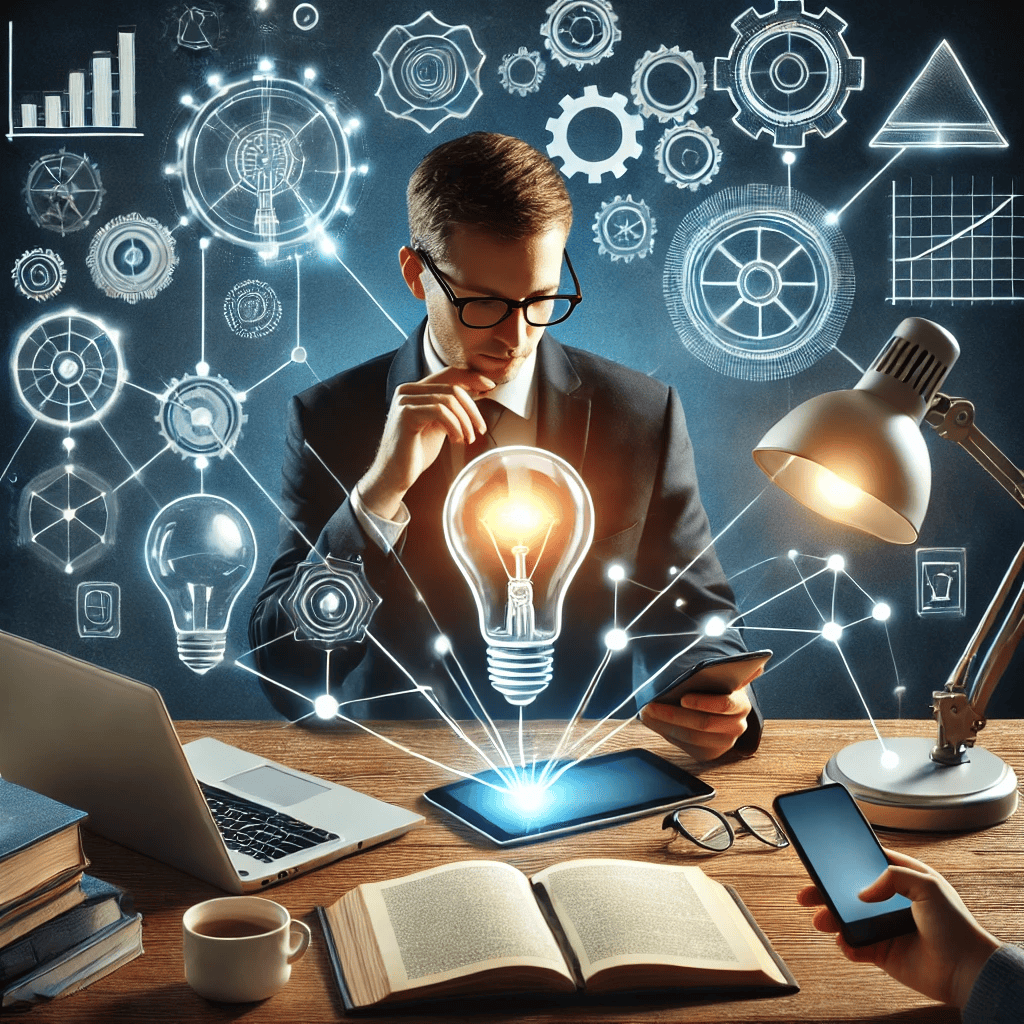
Learning new technologies and implementing them in our daily lives can be a challenging task. Many people invest in advanced iPhone’s or Android devices but struggle to use them to their full potential. The truth is, simply owning a new gadget does’t make you tech-savvy; knowing how to use it effectively does.
When we buy new tech products, we spend time comparing options. We look for the latest features. We also seek trend updates and aesthetics. For mobile phones, we focus on camera quality, processors, storage, and the newest software updates. If we’re buying a laptop, the decision process shifts based on the intended use. For office work, one type of laptop is preferred, while for coding, development, or graphic design, the specifications change. College students have different needs, like gaming, coding, graphic designing, and handling day-to-day academic projects.
I recently went through this process when I decided to upgrade my laptop and mobile phone. It wasn’t just about finding the right product; it was about keeping up with technology. After researching over 100 different products, I finally landed on the one that met my needs.
This brings to mind an incident I saw at a print shop. A couple was struggling to print instructions from a WhatsApp message. They wanted the text to be aligned properly. The shopkeeper was busy, and they didn’t know how to format it themselves. After watching them for a while, I stepped in to help. While they were familiar with the basics of technology, they weren’t aware of the advanced options available. Helping them not only solved their problem. It also opened my eyes to new ways of using technology that I hadn’t considered before.
The lesson here is simple: no one has set a limit on learning. You can learn multiple things at once or become an expert in a specific field. But the moment you stop learning, you stop growing. Technology is constantly evolving, and so must we. Owning the latest gadgets is just the first step; understanding and mastering them is what truly makes us tech-savvy.
So, keep pushing yourself. Stay curious and continue learning, because that’s how you stay ahead in a world driven by technology.
-
Navigating Financial Hardships: Lessons in Prioritizing Needs over Desires
There may be times in life when you face financial hardships, unable to afford even a meal for a day. Such experiences can be eye-opening, teaching you valuable lessons and motivating you to ensure that you never face such a situation again. During these tough times, you might start saving diligently, thinking about investments, and even helping those in need without expecting anything in return.
I personally went through a period of six months where I had very little money to spend. I would visit malls and luxury showrooms, not to buy anything, but to fuel my desire to earn more and spend less. I focused on purchasing only what I truly needed, ignoring my wants. For instance, I spent an hour roaming a mall and ended up buying just a bar of dish soap.
There were countless moments when my desires tempted me to spend more, but I constantly reminded myself of my financial constraints. I would ask myself critical questions: Why do I need this? How long will it meet my needs? What specific requirements does it fulfil? This introspection helped me make more rational decisions and avoid unnecessary expenditures.
During my visits to expensive malls and luxury showrooms, I observed the behaviour of other buyers. Many people spent over an hour deciding on a piece of clothing that would last only a few months. Others were enticed by credit offers, willing to buy things they couldn’t afford with their salary. This made me realize how common it is for people to be driven by desires rather than needs.
I’m not suggesting that if you can’t afford luxury items, you should never buy them. Instead, I urge you to reflect on your reasons for purchasing. Ask yourself: Is this fulfilling a requirement or a desire? If it’s the latter, take a moment to reconsider. There’s nothing wrong with fulfilling desires occasionally, but it’s essential to be mindful of your financial situation and priorities.
Going through tough times taught me the importance of distinguishing between needs and desires. It’s a lesson that has stayed with me, guiding my financial decisions and helping me build a more secure and fulfilling life. By focusing on what truly matters and being mindful of our spending, we can navigate through financial challenges and emerge stronger and wiser.
-
Food: The Great Equalizer in Society
In India, the street food known as “water balls” is cherished by people from all walks of life. It holds a special place in their hearts. It is more commonly referred to as Pani Puri, Gol Gappa, Fuchka, or Puchka. This beloved snack is everywhere. Vendors set up shop at nearly every busy market corner in cities across the country.
I had an intriguing experience that perfectly illustrates the universal appeal of this humble food. It happened in front of a large mall where a Pani Puri vendor had set up his stall. Despite the opulence of the surroundings, with high-end shops and luxury cars, the vendor’s stall was a magnet for passersby.
A BMW pulled up to the mall entrance, and a young woman stepped out. She instructed her driver to park the car inside the mall. She retrieved her iPhone 15 Pro Max from the vehicle. Then she tucked it into her bag and made her way to the vendor. She approached him. She requested a plate of Pani Puri. Then she joined the queue as the vendor served the snack in sequence.
She could afford almost any luxury life has to offer. Yet, she eagerly joined the line for a street food. It costs only a fraction of what she spend on a meal elsewhere. This moment highlighted a profound truth: food, regardless of its cost or setting, has a way of bringing people together.
Food is a universal experience. It doesn’t matter if it’s from a street vendor selling Pani Puri. Alternatively, it is a lavish meal at a high-end restaurant. In hotels, people wait for their turn, whether they’re ordering the most expensive items or something simple. Some fill their plates with rice and dal, while others choose roti and vegetables. Some prefer fast food, while others go for lighter fare.
Money can influence the type of food we eat. Nonetheless, it does not change the joy and satisfaction. Food brings happiness to everyone. It’s a reminder that, despite our different circumstances, food remains a common thread that connects us all. It satisfies both the rich and the poor. Food offers happiness to all who partake in it.
-
Navigating Pune’s Traffic: A Pedestrian’s Experience
If you live in Pune, you’re probably all too familiar with the city’s traffic. Even if you don’t live here, you can imagine the chaos: drivers in a constant rush, unwilling to yield. Now, think about the situation for pedestrians who need to cross these bustling roads.
Saturday, 27 July 2024
Traffic is generally heavy, but on weekends, traveling becomes nearly impossible. Travel times increase, accompanied by relentless noise pollution. My situation was different; as a pedestrian who loves long walks, I see things from a unique perspective.
Today, like any other day, I decided to go for a walk. I got ready, charged my phone, and plugged in my earphones to listen to a Pocket FM story. Everything was going smoothly until I had to cross the road. I waited for two minutes, hoping for a chance to cross, but none came. I removed my earphones and returned them to my pocket. I focused intently on finding a break in the traffic.
Ten minutes passed, and I still couldn’t cross. Then, a PCMC bus stopped, dropping off a girl in a white salwar. She had her face covered with a scarf and an ID card indicating she was a college student. She joined the line of people attempting to cross the road. Every time she took a step, she would retreat, clearly anxious about being late.
Finally, I saw an opportunity. I started to cross, and she followed. We made it past the first lane, where vehicles were coming from our right. I looked to my left, where she was standing, signaling that it was her turn to move. This time, we quickly found another gap and crossed the road together.
She headed to her destination, and I continued to mine. But the memory of that shared moment, crossing the road together, stayed with me. It was a brief connection amid the chaos. It reminded me of the small acts of cooperation that can make navigating this city a little bit easier.
-
Thank you 💞😊
-
तेरी यादों
तेरी बातें
जो प्रेरित करते थे
तेरा चेहरा
जिन्हें हम देखा करते थे
तेरी वो आंखे
जिनमें खोए रहते थे
तेरी वो जुल्फें
जिनके छाव में सुकून थे
वो हर यादें,
अभी भी दिलों में रहते हैं।
तेरे जाने के बाद
जीना मुश्किल हो गया
तेरे साथ के बिना
चलना मुश्किल हो गया
तेरे दूर होते ही
तेरे बिना
खुशियों ने मुंह मोड लिया
जो हिम्मत बांधी थी
वो सब टूट गया
इतना सब होने बाद भी
तुम ज़िंदा हो मेरी ख्वाबों में
तुम ज़िंदा हो मेरी यादों में
इस दुनिया मे तुम्हारे निशान
हो या ना हो
तुम अमर रहोगी मेरी बातों में -
दिल मेरा
बावरा दिल मेरा,
ना जाने कब बहल जाता हैं,
सुन किसी और के दिल की धड़कन
खुद ही पिघल जाता हैं।
नटकट, नादान सा,
हर किसी को अपना मानता
पर पगला दुनियां की भीड़ से
बिल्कुल अंजान सा।
कोशिश मेरी कि,
उसको लगाम दू।
सोचता हूं कि
उससे बंधनों में बांध दू।
डरा धमाका के उससे
उसे इस दुनिया का ज्ञान दू।
बावले दिल को मैं,
एक कुबशुरत सा संसार दू।
जहां कर सके वो नादानीया
कुछ ऐसा बगान दू।
थोड़े ना दिल को मेरे
ऐसा एक साथ दू।
जिससे पकड़ कर के जी सके
ऐसा एक हाथ दू। -
Hello World!
Welcome to WordPress! This is your first post. Edit or delete it to take the first step in your blogging journey.


-
Subscribe
Subscribed
Have a WordPress.com account? Log in now.

